JIMENA LOPEZ | CONNECTING ARGENTINA AND TEXAS WITH GRAFFITO WINES
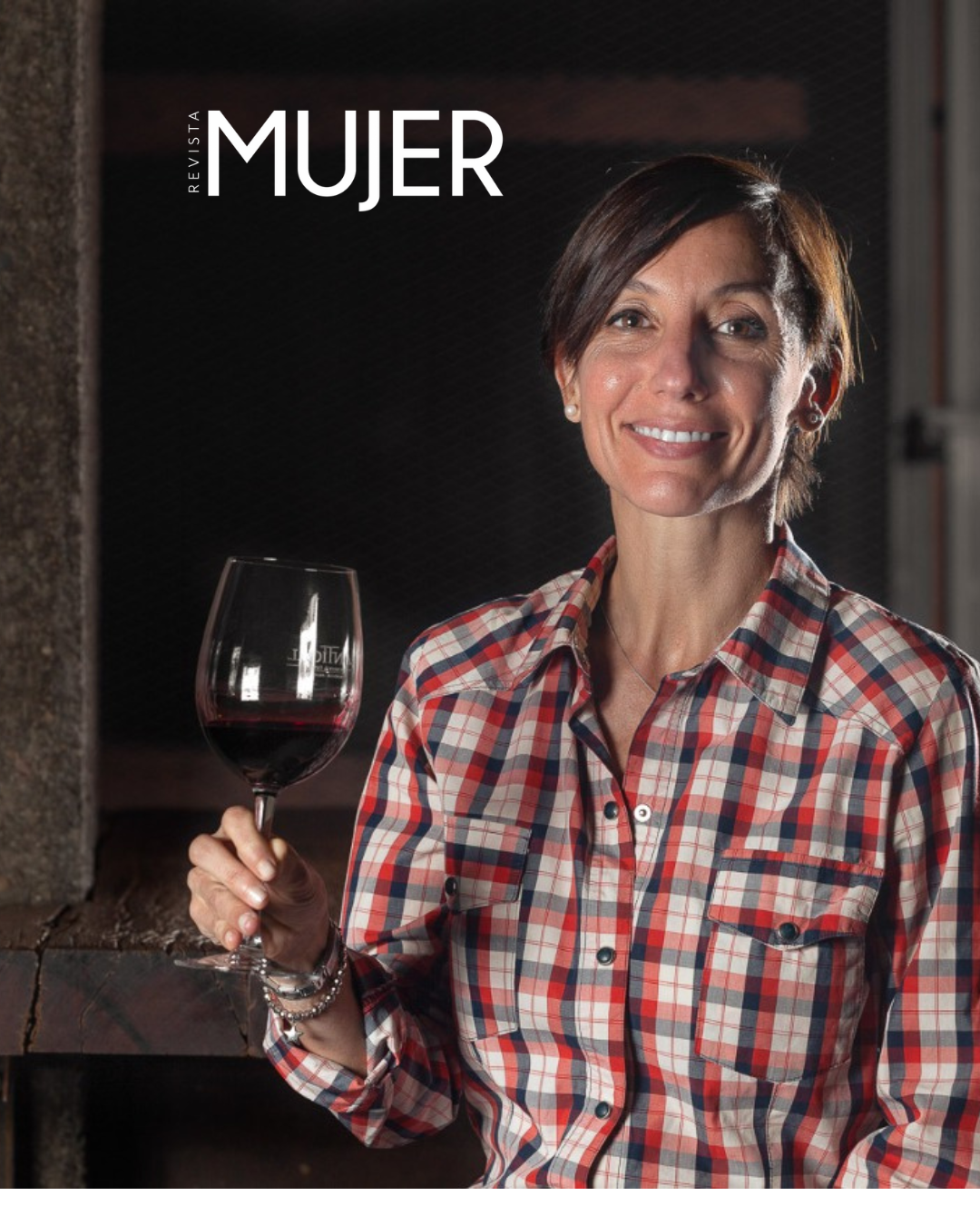
Jimena Lopez is a winemaker from Argentina who is connecting Argentina and Texas with Graffito Wines. She is an academic authority on wine who left her corporate job and decided to pursue her dream of making her own GRAFFITO wines bringing them to Texas.
Jimena Lopez currently handles all aspects of Graffito from vine selection to the final blend with precise attention to detail.
In 2008, after a long career with important wineries in Argentina, the United States, Australia and France, Jimena Lopez realized that she wanted to use all that experience to offer her own interpretation to a wine from the Andes without having to follow anyone else’s rules.
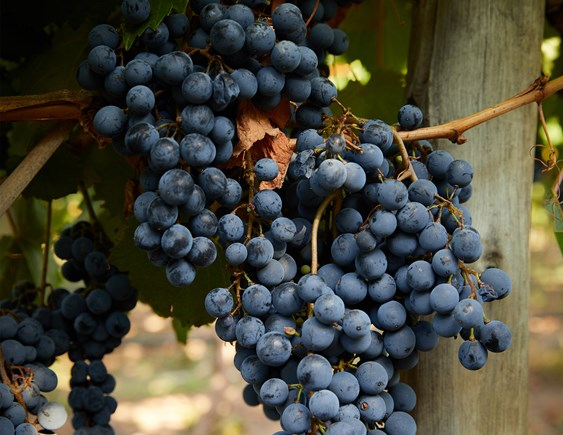
Jimena made her own winemaking dream a reality when she came across an old-vine Malbec vineyard planted in 1908 in Alto Agrelo farmed by Don Pepe and his family. The balance and structure coming from these old vines are the pillars of Graffito. Jimena also sources grapes from family-owned vineyards in Los Arboles and Vistaflores in the Uco Valley to round out her wines with the perfect blend of fruit flavors, floral notes, and spices.
INTERVIEW WITH JIMENA LOPEZ
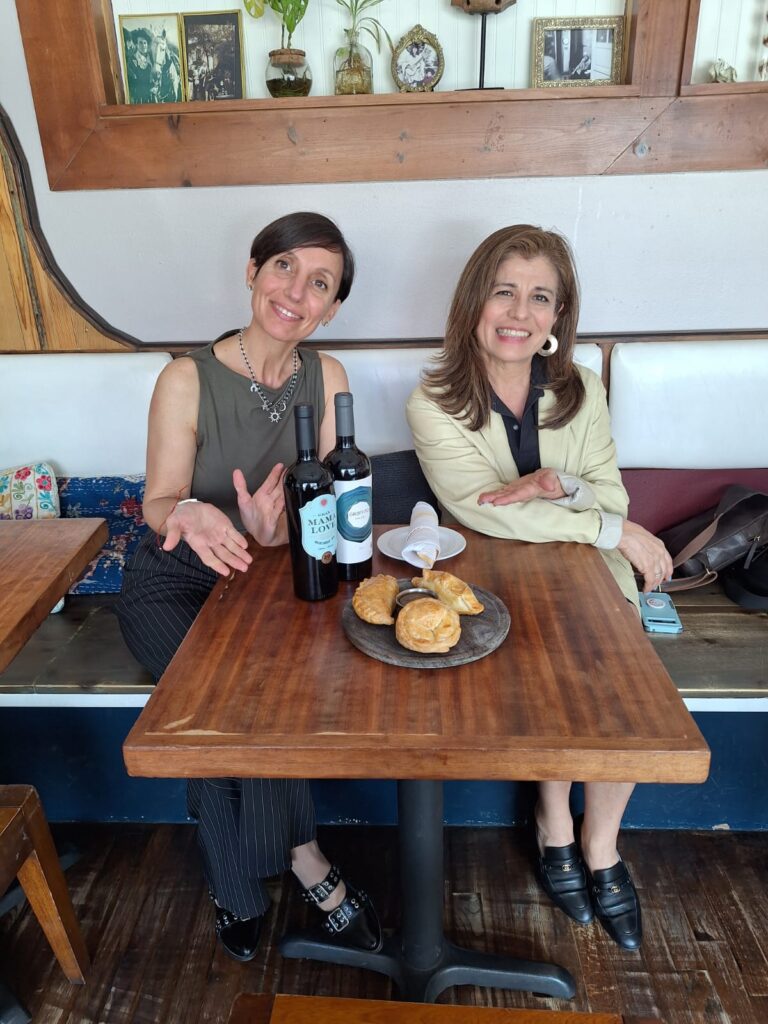
I had the unique opportunity to interview Jimena López during her visit to Austin at Buenos Aires Café. Her enthusiastic conversation was contagious and her passion and being as scientist and artist of wine was evident. I am pleased to share her conversation with you below.
Hola Jimena. It’s a pleasure to talk with you about your Graffito wines. Unlike many wine producers who enter this industry as second or third generation in their family wineries, you started on your own. What inspired you to dedicate yourself to starting your own wine brand after leaving your corporate job?
Yes, thank you. Well, the truth is that I don’t have any family members or background in winemaking or the wine industry.
I discovered this passion at the age of 17 when I was in my last year of high school, which specialized in viticulture. That’s when I did my internship at Chandon wineries.
After a long professional career in several countries, in 2008 I decided that I wanted to start making my own wine. I felt I was ready to apply all that experience in order to give my own interpretation to a wine.
INFLUENCE OF THE TERROIR OF ARGENTINA
Can you describe a little how the terroir of Argentina influences your Graffito wine production?
Mendoza is characterized by an absolutely continental climate. That is, we don’t have any oceanic influence, even though we have the Andes Mountains on one side and the Atlantic Ocean on the other. But it’s more than 1200 kilometers away.
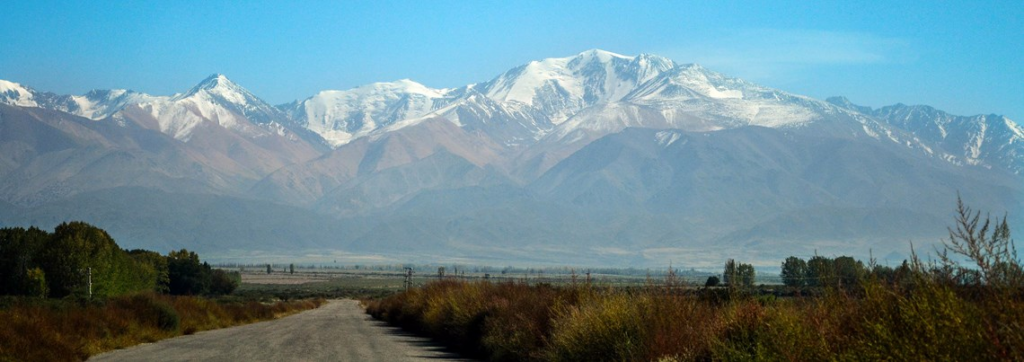
Therefore, our climate is dry. It never rains in Mendoza. It’s a desert, and any agricultural crop, including grapevines, has to be artificially irrigated.
For us, water is an extremely precious resource because we don’t have an abundance of it. In fact, the winter snow is very important to us because it’s the water we’ll have in the summer to irrigate the crops. So, for us, having a snowy winter in the Andes Mountains is very important, essential.
All these characteristics: the dry climate, the continental climate, the altitude have a direct impact on the characteristics that make the wines we produce in Mendoza very unique.
WOMAN IN THE WINE INDUSTRY
What challenges have you faced as a woman in the wine industry?
I can tell you that the first five years were incredibly tough for me. When I talk about 1993, there were practically no women in high-ranking positions in wineries. It took me five years to get out of the laboratory because I wanted to work in the cellar.
But to even have a chance, I had to be excellent, so I took it as a personal challenge. I worked, I studied, I traveled, and I was very consistent and very persistent for many years. It wasn’t easy because I was the only woman in my class at university.
But I must also mention that all the job opportunities I had at the different wineries where I worked were opportunities given to me by men.
All my bosses were men. And all of them, at some point, trusted me and gave me a chance. And furthermore, I was able to work in different countries around the world.
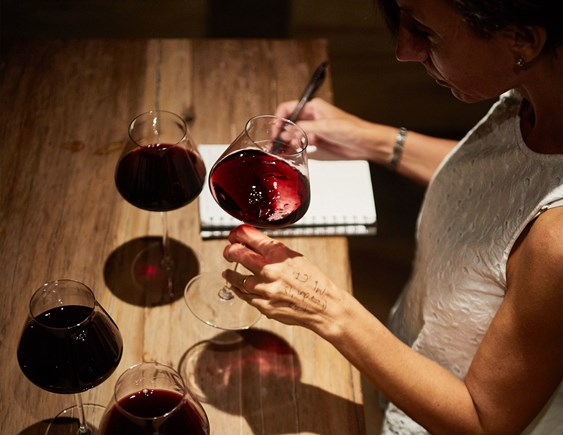
Nowadays the presence of women in the wine industry in Argentina continues to grow. Ten years ago, we formed the Professional Women of Wine club in Argentina. Today, there are more than 130 female professionals who hold top positions in wine companies in Argentina.
THE NAME GRAFFITO
Can you tell us a little about how you came up with the name Graffito?
A well-known winemaker from the winery saw the grape juice that was fermenting and said to me: «Jime, the color of that wine looks like graphite.»
And I really liked it because graphite is one of the aromatic attributes of Malbec from Luján de Cuyo, which is where I have a small vineyard.
Also, graphite is the material of the pencil, used to write, design, and draw a project, a dream that I had for many years and that I couldn’t pursue for various reasons.
How would you describe the essence of GRAFFITO wines?
Well, I think it’s my own interpretation. I want to create a wine that embodies the Argentine identity, but one that is approachable, elegant, and refined. A wine that people will remember fondly. That’s essentially the goal of Graffito.
I want to express what the grape offers in that small corner of Mendoza, in that specific terroir.
SUSTAINABILITY PRACTICES
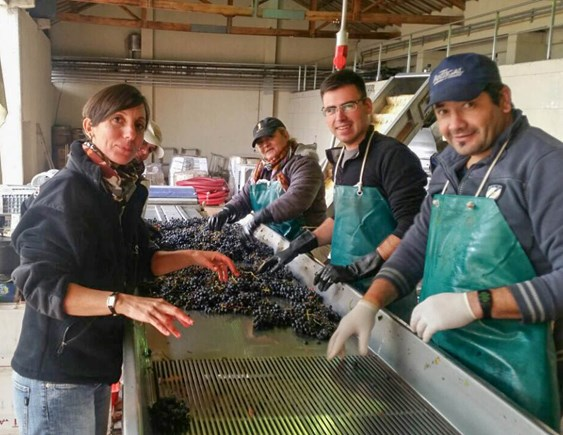
How does GRAFFITO incorporate sustainable practices in its vineyards?
This is very important because it is a necessity today. We must learn and work towards sustainability, but not only in terms of environmental management.
In other words, not only by avoiding the use of pesticides or chemical herbicides, but also by helping to promote the biodiversity of the native flora and fauna or your local authority in order to make wine production sustainable.
This means not only working with sustainable practices in the winery, which means taking great care with water use, working with cleaning products that are biodegradable and do not affect the waterways; but also taking great care with energy consumption. In other words, starting to specialize systems so that the process itself is sustainable.
Glass transportation in the wine industry is what generates the gratest carbon footprint; it is what has the greatest impact on carbon dioxide emissions. So today we have a whole development process of working with lighter bottles. With GRAFFITO, I have been working on the sustainable production process for several years now.
WINE PRODUCTION IN THE FUTURE
How do you see wine production in the future?
Well, I am very convinced that the global market is very changeable. What was a trend two years ago is different today. I can tell you that today, in large markets, people are asking for wines with lower alcohol content.
There is exponential growth in the consumption of white and sparkling wines because this means that people want to drink lighter, fresher wines with lower alcohol content.
There is also a major return to native varieties. In this search for each country’s identity, the markets are looking for their own identity that may somehow have been lost. So we are re-educating ourselves and working with our native varieties.
WINE ON TAP
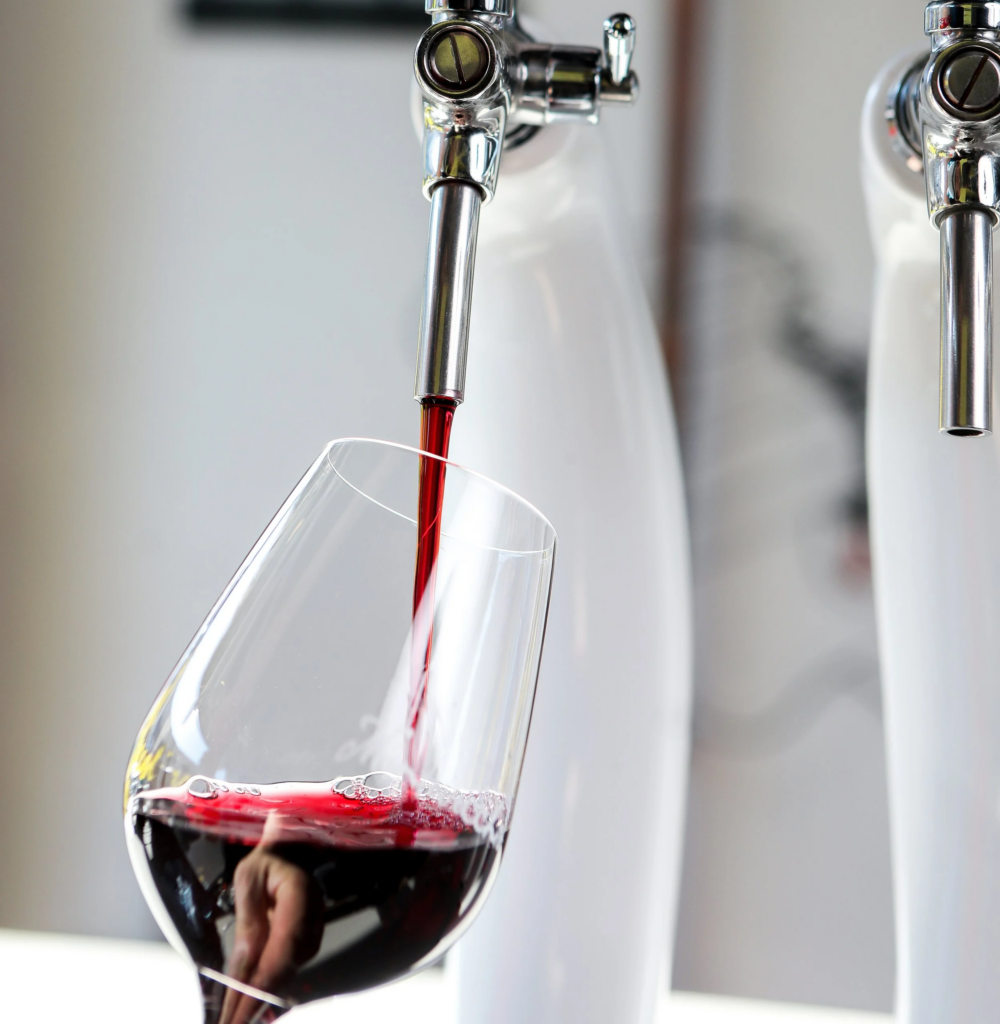
We have also seen a trend toward drinking wine by the glass, or “wines on tap,” which no longer come in bottles but in containers called kegs. What are the advantages of using this type of wine transported in kegs?
It has several advantages. The first advantage is that it is a much more sustainable concept for wine because, in a way, shipping wine in bulk in large containers in Flexi bags in flexitanks, means there is no need to use bottles, labels, corks, or cardboard boxes. All nstead, all of that material that was previously used is no longer necessary because of aluminum kegs, which are reusable.
So, from a sustainability point of view, there is much less dry input during the bottling process.
In addition to the sustainabaility process, the keg system usese argon gas, which is an inert gas, injected into the top. This means that from the first glass to the last, the aroma and color characteristics always remain intact.
The latest development on the market is what are called “One Way Kegs,” which are made of a hybrid material that can be recycled once it is empty and no longer contains wine.
This eliminates the need for return transportation as well as the use of cleaning products and water. These are the advantages.
GRAFFITO AND BUENOS AIRES CAFE
Can you tell me a little about the Graffito wines you are presenting for Buenos Aires Café 20th anniversary?
I have Riesling Graffito. This is a very special wine for me because I made it in honor and memory of a great German friend of mine, her name was Stark Nevitz and we worked together in Australia.
Next, we will taste a Marvel Graffito, which is the first wine I started working with on my own project. It is a wine with a beautiful concentration of fruit, very aromatic but also very elegant.
And then we’re going to try the Graffito Cabernet Franc, which is also from the Luján de Cuyo area, but from a vineyard that is about 1,200 meters above sea level. It’s a wine that I love because I purposely marke the middle rows with yellow ribbons because they get more heat. So it’s like a very precious selection.
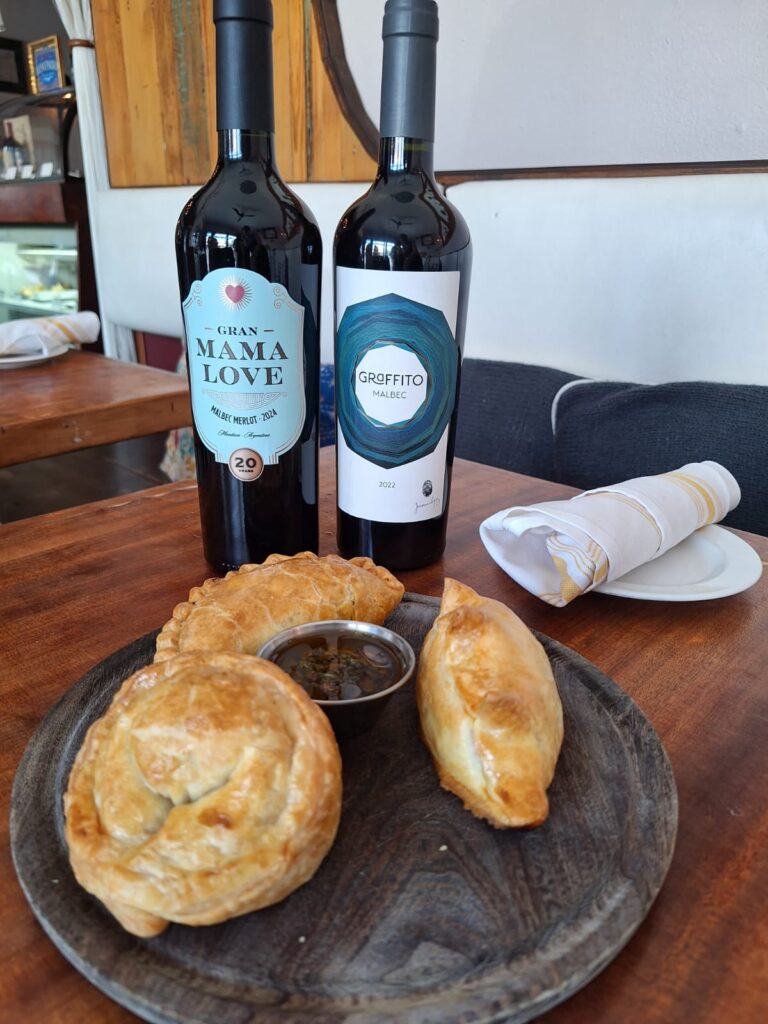
Finally, I came here to present a special wine that I made for Paola and Reina called Gran Mama Love, to celebrate 20 years of Buenos Aires Café.
So Grand Mama Love is a very nice varietal of Malbec and Merlot, a bold, expressive, and full-of-life wine that represents the two generations of Paola and Reina working together. I want to celebrate mothers and daughters around the world who are demanding, who subsist, and who are successful women entrepreneurs. And also I want to celebrate the vibrant connection between Argentina and Texas.
Follow Jimena Lopez here: @maria_jimena_lopez_campos @graffito.wines
and come and taste her Graffito wine at Buenos Aires Cafe @buenosairescafeatx
By Lilia Rodriguez-Davis
Photos courtesy of Jimena Lopez and Wine Connections