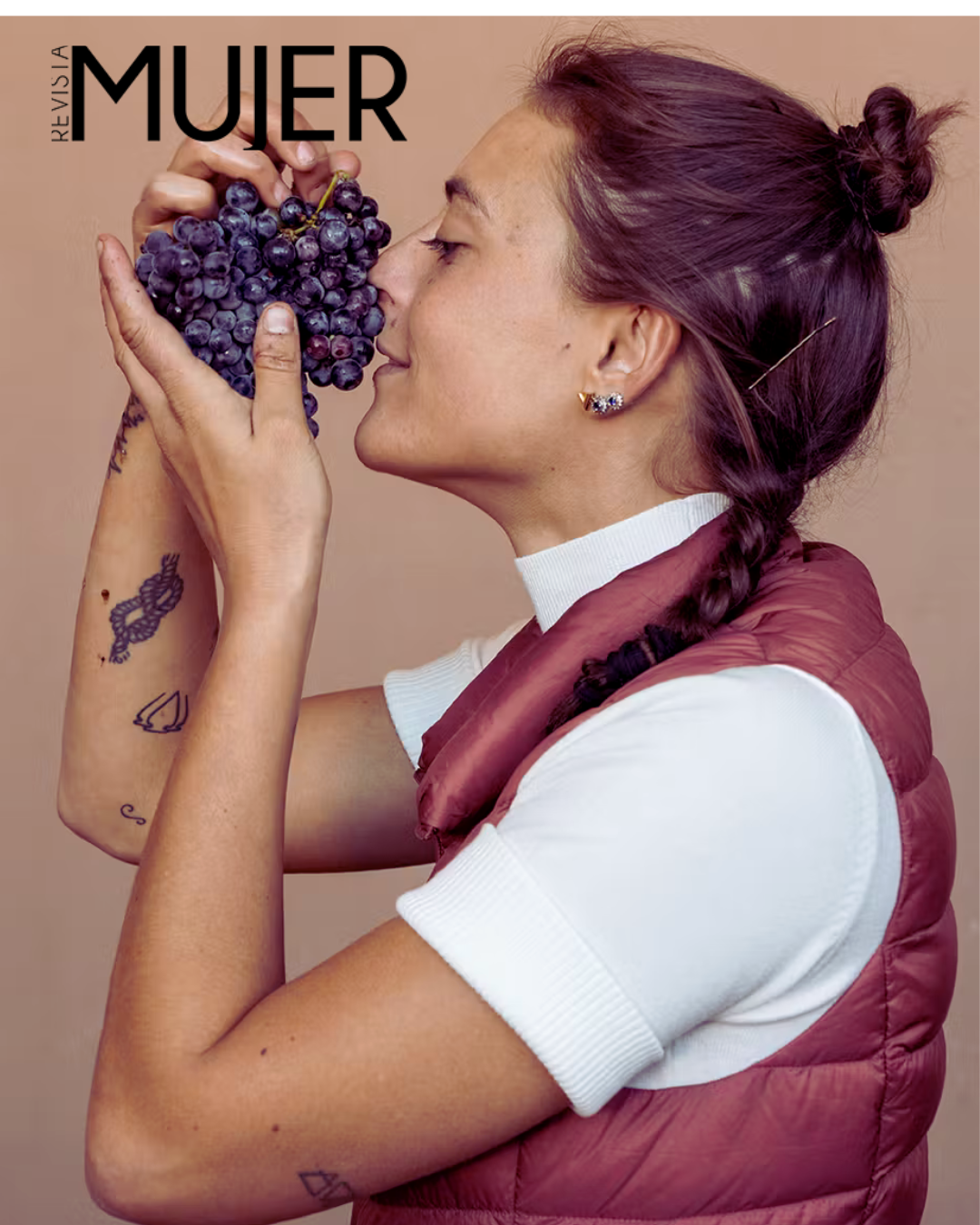
Elena Casadei is an Italian winemaker who grew up among Tuscany’s winemaking natural surroundings. One could say she has “roots” in the business; she is the daughter of winemaker Stefano Casadei and granddaughter of an agronomist.
Elena Casadei is currently the main figure behind “Le Anfore di Elena Casadei,” – a project to create wines that embody excellence and that perfectly express the individual grape variety and region.
It comes as no surprise then, that one of Elena Casadei’s wines, Le Anfore Cannonau, crafted at Tenuta Olianas in Sardinia, recently won the Gold Medal at the 2025 Grenaches du Monde, the international competition exclusively for wines made from Grenache grapes, what we call Cannonau.
WHAT IS LE ANFORE di ELENA CASADEI?
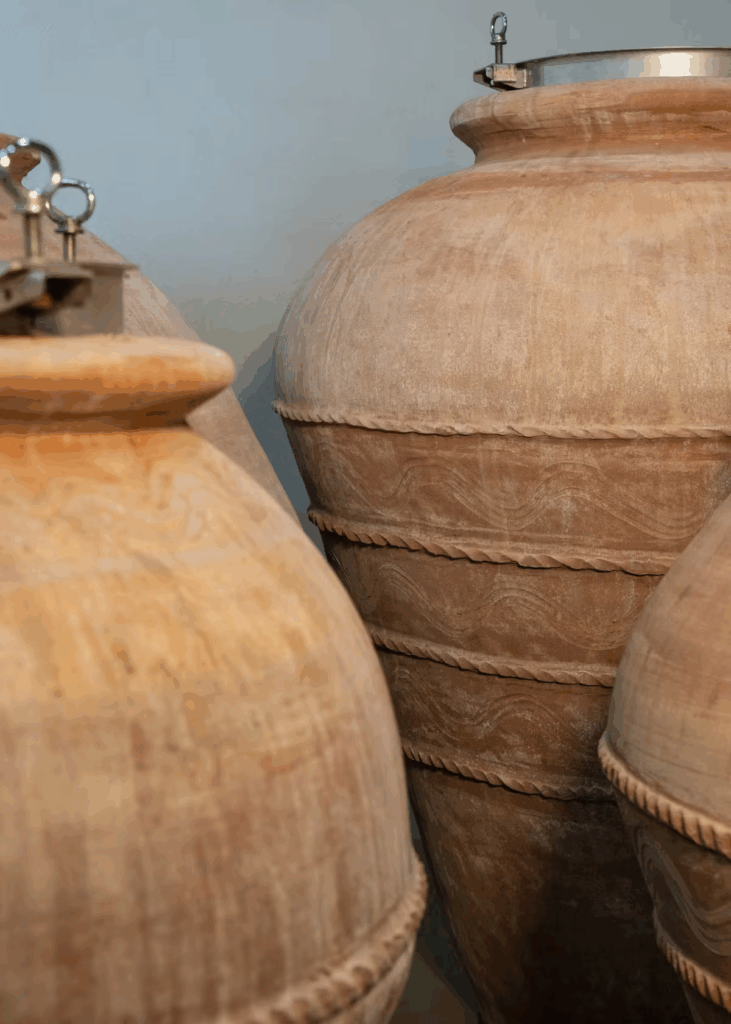
Le Anfore di Elena Casadei is an innovative winery that specializes in making wines in terracotta vessels called amphoras (or “anfore” in Italian) which come from both Georgia and Impruneta, Tuscany.
The project combines traditional winemaking techniques with modern methods. Because:
“Amphoras allow for natural micro-oxygenation, and the wines are produced without synthetic additives and with minimal mechanical intervention. This approach preserves the authentic aromas of grapes and terroir, imparting the wines with natural quality and purity.”
ELENA CASADEI AT VINITALY
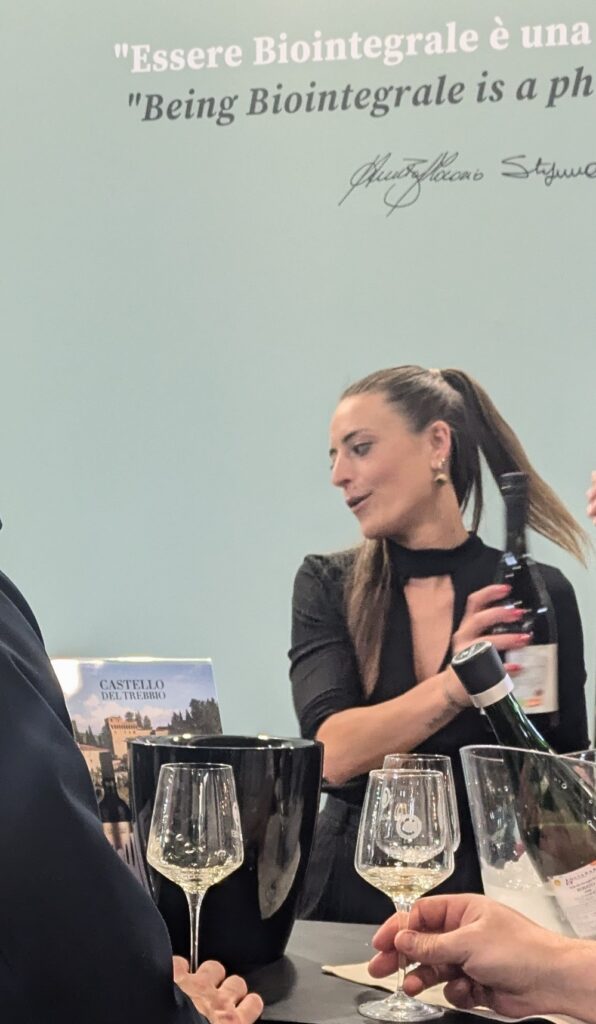
I first met Elena Casadei at the Vinitaiy Wine festival in Verona Italy. Elena’s enthusiasm for the amphora method of making wine was contagious. Despite her jam packed schedule of wine tastings,
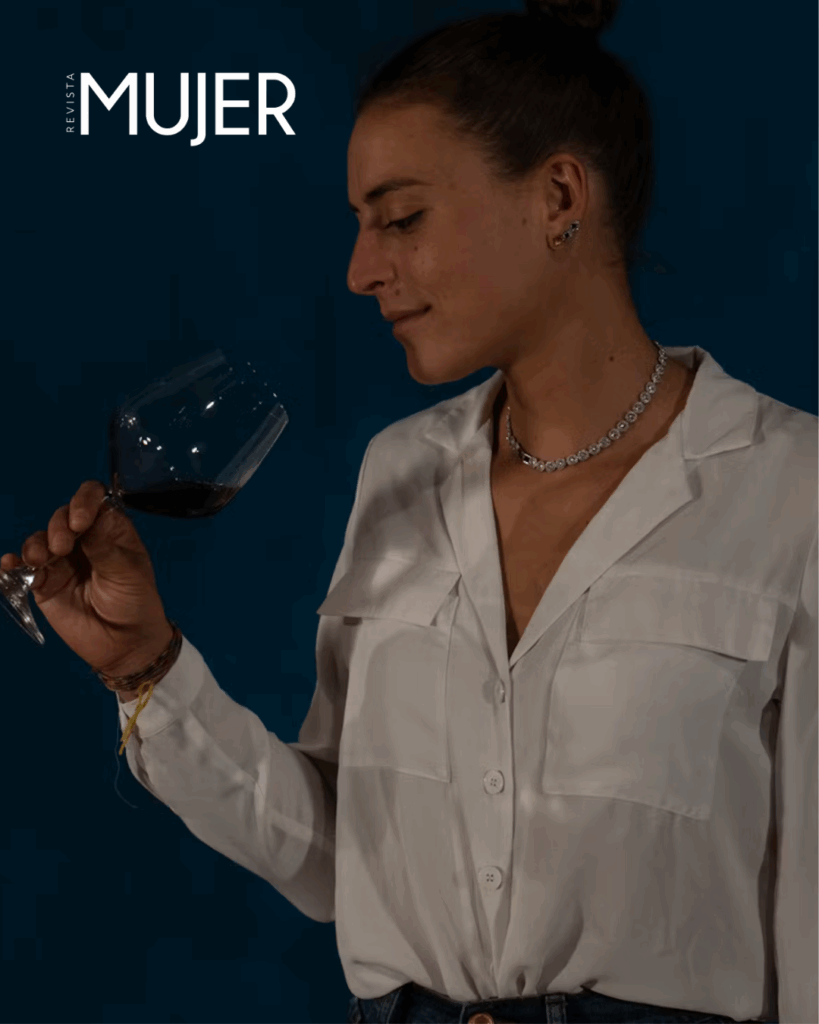
Elenas was courteous and kind, graciously making time for an interview. Sporting a long pony-tail and dressed in black, Elena cut an elegant figure.
Her bright smile and striking hazel eyes light up with self assurance and pride when talking about her wine.
We had a pleasant and fun conversation, captured for readers below.
FAMILY BUSINESS
What a great pleasure to meet you, Elena, and talk about your wine and Le Anfora project. Let’s start with your experience working in a family business. Was it hard?
YES! (laughing) with my family, yes. Actually I escaped from my family’s business. When I was 18 years old I told my parents, – “Mom and Dad, I do not want to make wine. – I am getting out of this.”.
But one year, during the holidays, I came back home and I needed money to go out and do things. My parents said, “No., You have to work.” In fact, my mother said, -You can go and start at the cellar.”-
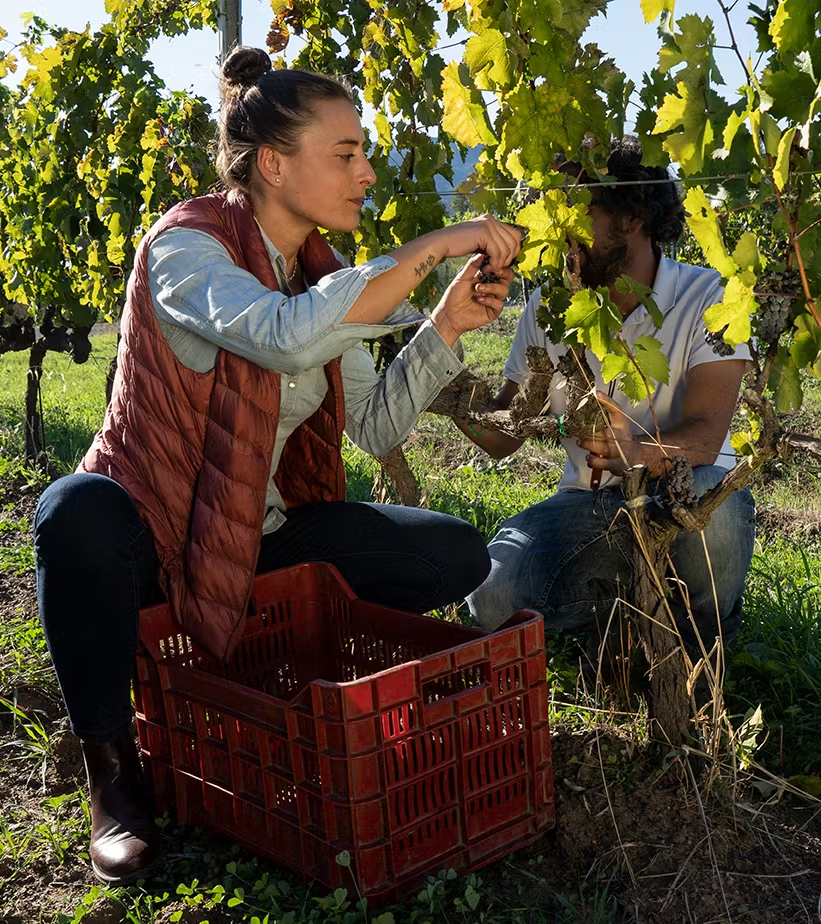
So, I started working with the young people that work for my parents in the winery. Later, I discovered le Anfore and with that I discovered my passion for making wines. And after two years, I decided to create my own line
THE ANFORA METHOD
Are there any other winemakers producing with the Anfora method?
Yes, there are other winemakers, but when I started, almost nobody produced wine with Le Anfore, just very few. Now there are a lot of winemakers that are going to have Anfore in their cellars, I think because of the goodness of it. To me, Anfora is the best method you can use.
Why do you think Le Anfore is the best method?
With our wine, each glass of wine has to respect the variety, the terroir. During the tasting process the grapes are confirmed to be up to the standard in the transformation into wine; they will see no other container but the amphora.
And if the wine is not perfect, if it does not adhere to these standards, I will not put it on the market.
In this manner, these wines are the pure expression of the fruit, honoring the purity of Le Anfore and in a pure Biointegral style.
BIOINTEGRALE STYLE
In 2013 your family developed a handbook with a programme plan and registered the Biointegrale trademark.Tell us about that. What is the Biointegral Style?
Biointegrale means rediscovering good, sound, traditional agricultural practices that optimize the health and biological vitality of the soil and thus, enable us to limit human intervention on the vine. Like my father expresses:
«Earth, water, air, light, the primary elements without which no life form would exist, are the basis of the BioIntegrale philosophy and approach. These elements are the tools that Tenuta Casadei uses to farm, protect the habitat of animals and insects, and safeguard the ecosystem.» – Stefano Casadei
You’re passionate about wine and a successful italian wine maker, but as business woman would you consider it a high cost to have Le Anfore method for wine making?
Yes, the cost of production with Anfore is high, because you select very precisely the quality of the grapes, or sometimes, you need to select a lot to have good quality grapes.
After you put the grapes in le Anfore, you have to do all the work by hand every day. So it is also time consuming; – the fermentation is guided by hand. But I think you can compare the cost of these wines with others.
“I don’t want to have a very expensive bottle, because I want everyone to be able to drink my wine, especially young people.”
CASADEI WINERY
Where is your winery located, and what types of grapes do you use to make Le Anfore wines?
Casadei winery is located in Pontassieve, in the Tuscany region, near Florence. Le Anfore wines are made from various grape varieties including: Sangiovese, known for its strong tannins and high acidity;, Syrah, for its spicy and fruity notes; Cannonau, for its intense fruitiness; and Trebbiano, for its freshness and structure.
Well, Vinitaly feels like Milan Fashion Week! Each year we say hello to everybody, and it feels good. Wine is the main character here in all aspects. People here are also very open.
In Agronomia here there is a lot of respect for the land and for each other’s work.
What advice would you give to women who want to start making their own wine?
I can suggest that you start drinking it, but drink in a good way. For a winemaker, you have to have good quality wine so you can have a good idea.
People have to know that the terroir makes a difference in the wine. For example, the Mediterranean climate of Tuscany, with hot summers and mild winters, offers ideal conditions for viticulture.
You have to know that from the wine and with this you understand a lot.
Can you describe the essence of your work with Le Anfore in just one paragraph?
In my work with amphora, these ancient vessels, I interpret it through a modern lens. I try to give wine a cultural soul, yet one that is accessible to everyone. To those who, like me, hold a deep respect for the land and all the stories it carries.