Mionetto Prosecco | My Journey into the Heart of Valdobbiadene

Prosecco has long been at the top of my list of favorite Italian wines. So, after attending Vinitaly in Verona, when I was invited to visit the Mionetto Prosecco headquarters in Valdobbiadene, I was more than ready to go.
What I wasn’t prepared for was how deeply this journey would stay with me.
I thought I was simply going to learn more about one of Italy’s most iconic sparkling wines. Instead, my visit to Mionetto became one of the experiences that helped lay the foundation for what would become my growing passion for wine.
Founded in 1887 by Francesco Mionetto, the winery grew from a deep connection to the extraordinary landscape of Valdobbiadene, where steep vineyard-covered hills, Alpine breezes, and generations of winemaking tradition shape the character of Prosecco.
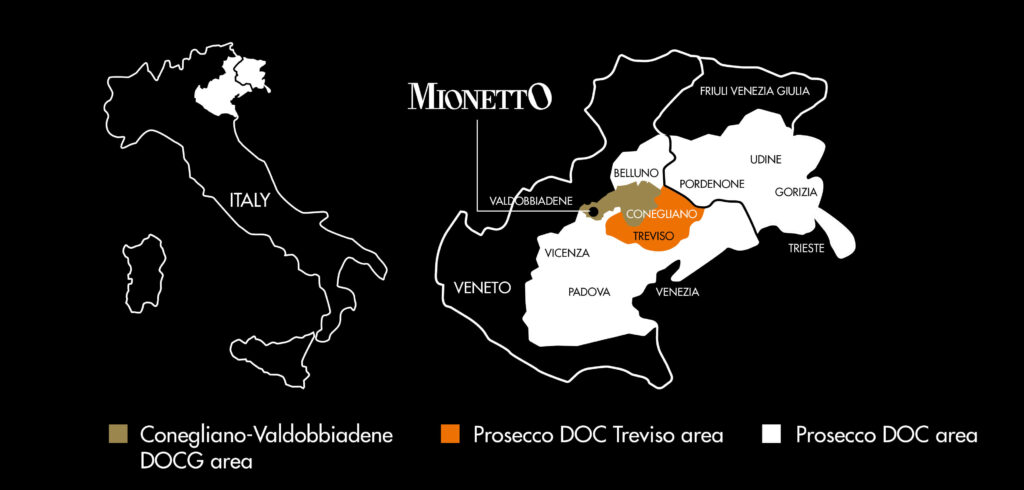
Today, Mionetto Prosecco is one of the best-known names in Italian sparkling wine, bringing the spirit of the Veneto far beyond its northern Italian home and into glasses around the world.
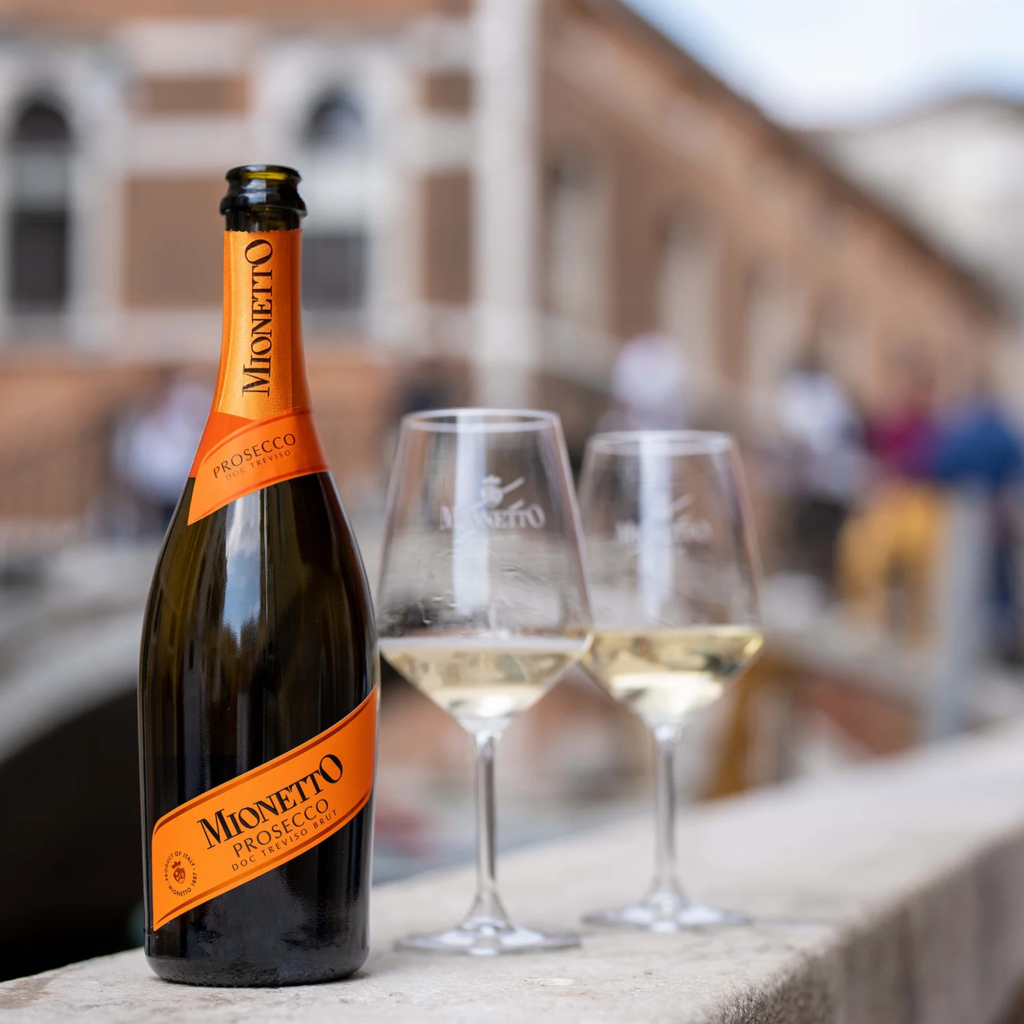
For me, discovering Mionetto meant more than tasting Prosecco. It became an invitation to experience the place, the people, the traditions, and the craftsmanship behind every sparkling glass.
Here are my five reasons why Mionetto Prosecco is so special to me.
1. The Heritage of Valdobbiadene and the Prosecco Hills
Long before Prosecco became synonymous with Italian celebration around the world, Mionetto was already rooted in the hills of Valdobbiadene, one of the most important areas in the world for Prosecco.
In 2019, the Prosecco Hills of Conegliano and Valdobbiadene were inscribed as a UNESCO World Heritage Site, recognizing a cultural landscape shaped over generations by viticulture and the people who have cultivated these hills.
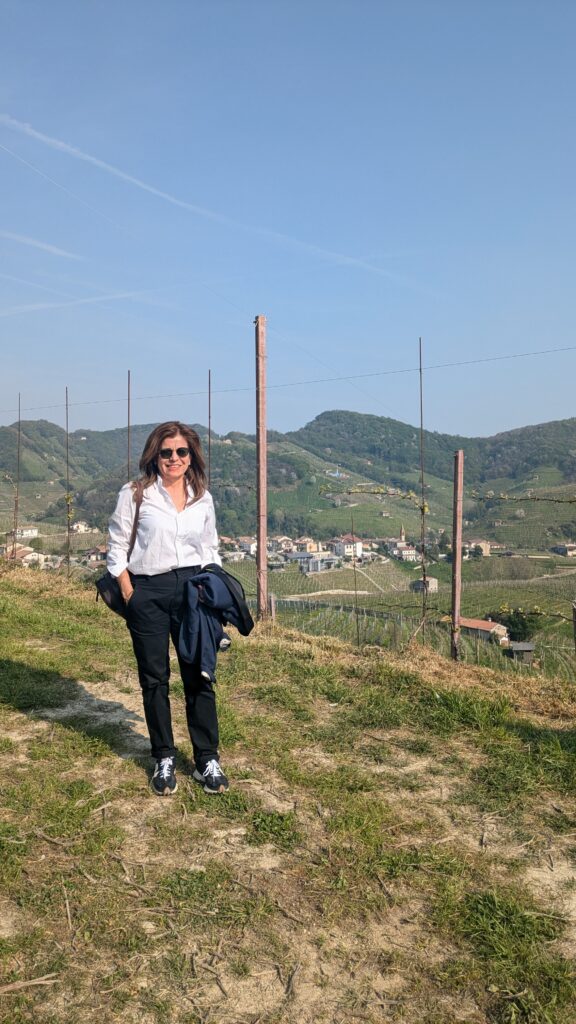
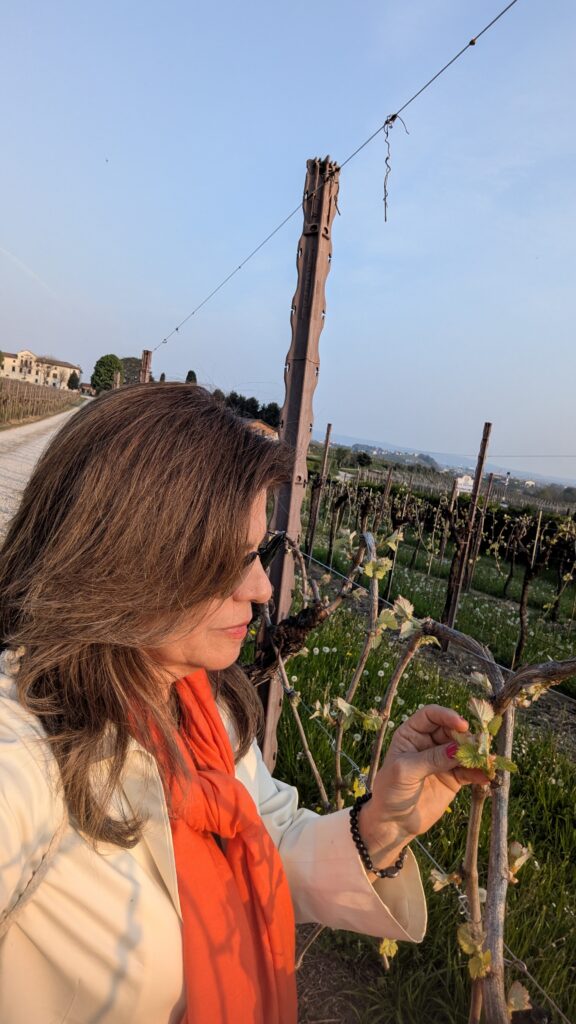
I was fortunate enough to experience this landscape firsthand during a special tour of the vineyards, and the view was mesmerizing.
There is something very different about seeing the origins of a wine rather than simply reading about them on a label.
Standing among the vineyards, I could see the hills where Glera, the principal grape used to make Prosecco, is cultivated.
Suddenly, the wine in my glass had a sense of place.
The rows of vines seemed to follow the contours of the hills, creating a landscape that was both beautiful and remarkably dramatic.
It was a reminder that Prosecco is not simply a sparkling wine—it is deeply connected to the land from which it comes.
2. Mionetto Prosecco History and Legacy
The story of Mionetto Prosecco begins in 1887, when Francesco Mionetto founded the winery in Valdobbiadene with a forward-looking vision: to express the character of his native territory through wine and eventually share it beyond the hills of the Veneto.
More than a century later, that connection to the local community remains an important part of Mionetto’s identity.
As I learned during my visit:
“The winemaker’s job is not only to produce a high-quality sparkling wine, but to maintain the relationships with local farmers who provide the grapes.”
Those relationships are particularly meaningful in a region where viticulture has been passed down through generations. Mionetto works with vineyard owners whose connections to the winery have themselves become part of a larger family story, with relationships continuing from one generation to the next.
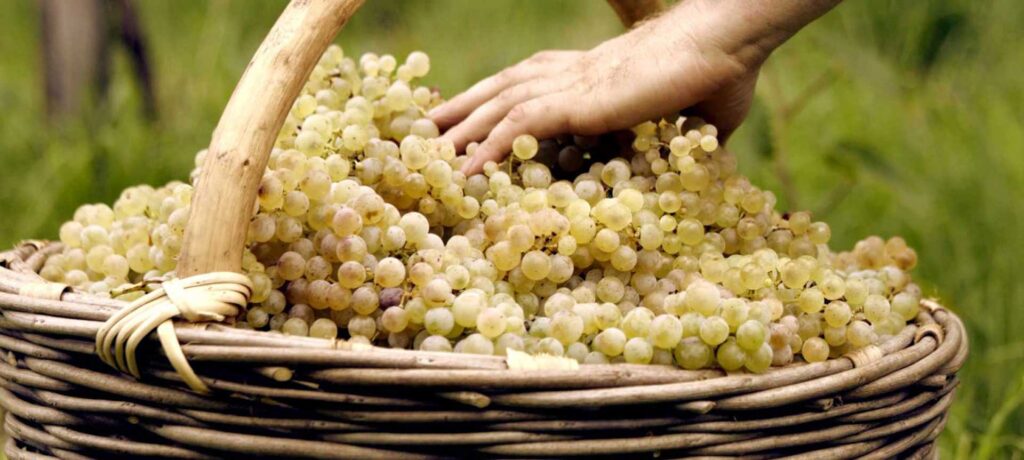
That sense of continuity—between the land, the growers, and the winery—is one of the things I found most compelling about Mionetto.
At the same time, the company has continued to evolve and earn recognition on the international stage. Mionetto wines have received awards from competitions including the Decanter World Wine Awards, Concours Mondial de Bruxelles, Mundus Vini, Berliner Wine Trophy, and Champagne & Sparkling Wine World Championships, among others.
The awards are certainly part of the story, but for me, they are most meaningful when viewed alongside the history and relationships behind the bottle.
3. How Mionetto Prosecco Is Made
One of the most fascinating parts of my visit was learning about what happens between the vineyard and the bottle.
A significant milestone in Mionetto’s history came in 1982, when the winery introduced fermentation in autoclaves using the Charmat-Martinotti method, a technique particularly well suited to preserving the fresh, aromatic character of Prosecco.

During my visit to Mionetto’s historic headquarters and a private tasting, my host, Monia Carlet, Hospitality Manager and expert in Prosecco and wine explained how this method plays an important role in the personality of Prosecco.
This method helps preserve the freshness and expressive aromas associated with Glera. Think of the delicate aromas that immediately come to mind when tasting Prosecco: green apple, citrus, white peach, and fresh floral notes as their Portafolio Aromatico Del Prosecco (Aromatic Profile of Prosecco) indicates:
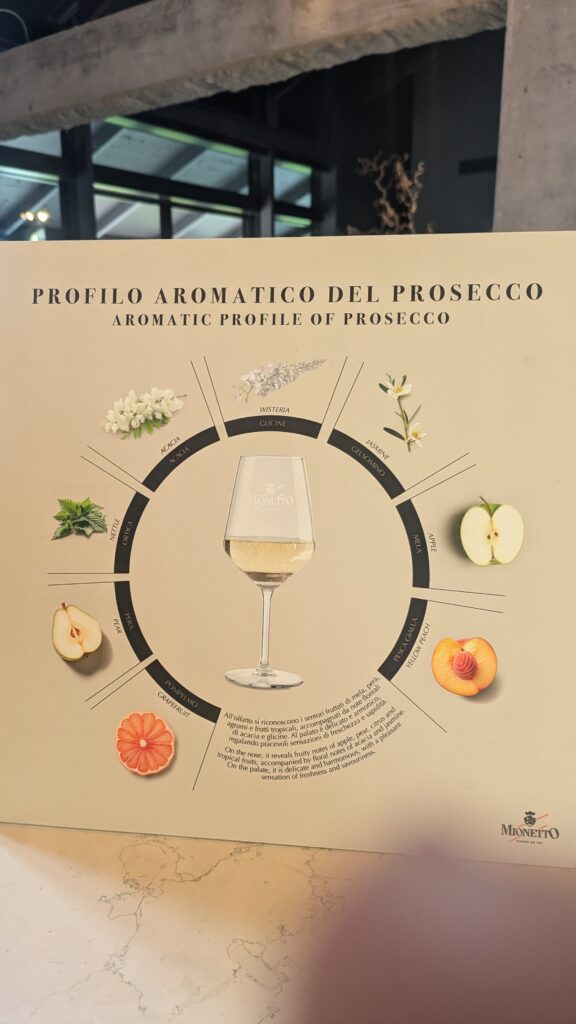
Unlike traditional-method sparkling wines, where the second fermentation takes place in individual bottles, the Charmat-Martinotti method carries out the second fermentation in temperature-controlled stainless-steel tanks, known as autoclaves.
As I was told during my visit:
“This additional temperature-controlled fermentation is recommended for Prosecco in order to help maintain the freshness and aroma of the grape in the bottling phase.”

And then came one of the numbers that really put Mionetto’s scale into perspective: approximately 50 million bottles produced across its portfolio, with production reaching around 230,000 bottles per day.
From the vineyard hills of Valdobbiadene to that kind of global production, it is quite a journey for a winery that began with Francesco Mionetto in 1887.
4. Mionetto Salone: Where Prosecco Meets Italian Culture
Not every wine experience is about tasting notes and production methods. Some are about how a wine makes you feel.

One of the most fun and immersive experiences I have attended in the wine industry was Mionetto Salone.
Inspired by the historic tradition of the salone—a gathering place for art, poetry, literature, conversation, and cultural exchange—Mionetto created Salone as a contemporary celebration of Italian creativity.
I attended the first Mionetto Salone in New York during Prosecco Week and later experienced it here in Austin during SXSW.
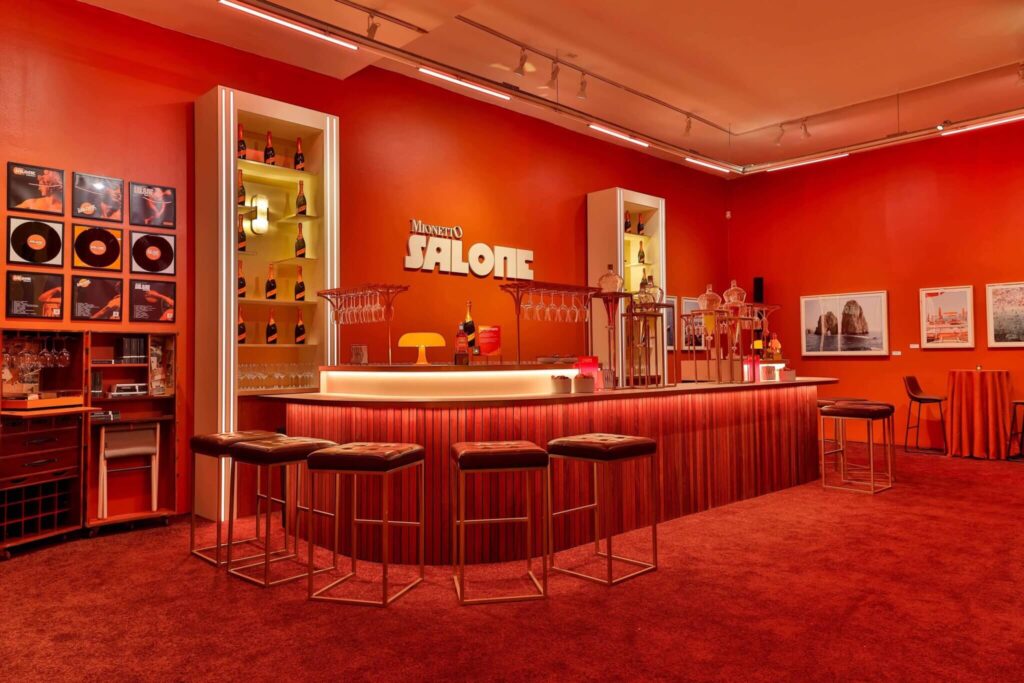
The concept was wonderfully expansive. Rather than simply presenting Prosecco, the experience brought together art, cuisine, design, fashion, music, and film, creating an immersive expression of Italian culture.
And there was one detail impossible to miss: orange.
The modern installations were custom designed, and orange became the visual thread connecting the experience. From the décor to the artistic details, everything felt energetic, stylish, playful, and unmistakably Italian.

For me, Mionetto Salone demonstrated something important about Prosecco: it doesn’t have to remain confined to the traditional wine experience. It can be a gateway to culture, creativity, celebration, and connection.
5. A Night at Villa Morona de Gastaldi
And then there was the villa.
As part of my Mionetto Prosecco experience, I had the opportunity to spend a night at Villa Morona de Gastaldi, an extraordinary historic property in the heart of the Prosecco DOCG landscape, just a short distance from Mionetto’s historic headquarters.
I was welcomed with the keys of the Imperial Suite at the second floor of The Villa Morona de Gastaldi with a beautiful breathtaking view of the vineyards.
The Villa, comissioned by a Ventian merchant in 1571 is a beautiful example of a Venetian villa with an oratory. Its architecture and history reflect the deep connection between this part of the Veneto and Venice itself where the wine became part of the traditions and celebrations of La Serenissima, the former Republic of Venice.
That evening, I walked approximately a mile and a half into the center of Valdobbiadene for dinner. There was only one place open that evening, but sometimes those unexpected moments become the most memorable.
I had a pizza topped with the area’s famous white asparagus, and afterward I loved watching local residents gathered outside the piazza, dressed up for the evening, talking over a glass of wine. It was simply everyday life in Valdobbiadene.
Breakfast was an experience in itself—beautifully arranged pastries, yougurts, fresh juice, and Italian coffee of course all served on beautiful, elegant china.
For a moment, I felt less like a visitor and more like a Venetian queen.
I didn’t want to leave. But my last-minute private transfer was waiting to take me to the train station and begin the journey back toward Milan, where I would catch my flight home to the United States the following day.
My Mionetto Prosecco Journey
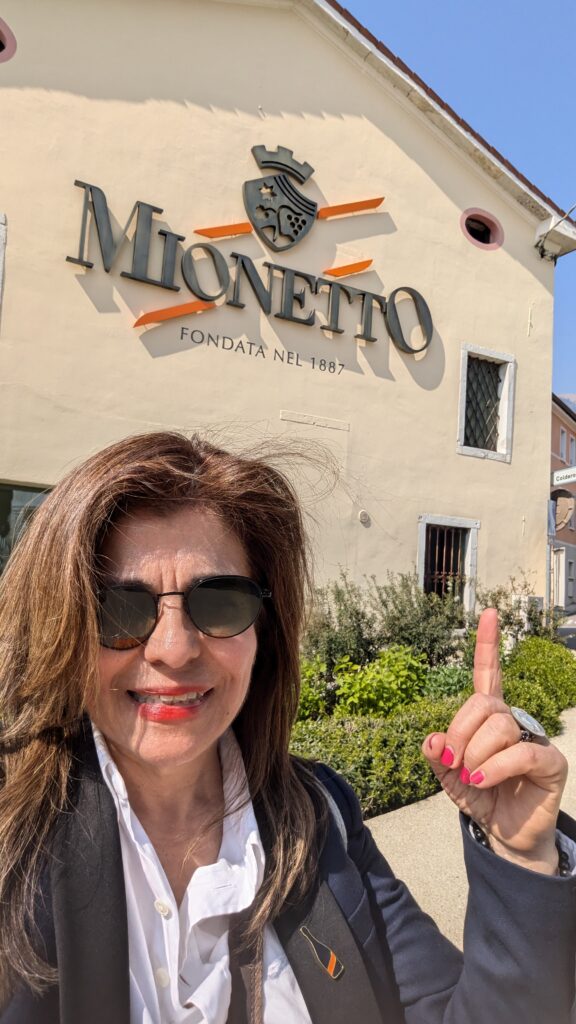
My journey to Mionetto began with a love of Prosecco.
It ended with a much deeper appreciation for the story behind it.
For me, discovering Mionetto was never simply about tasting Prosecco. It was about experiencing the place, the people, and the traditions behind every sparkling glass—and discovering how one bottle can open the door to an entire world.
From the vineyards of Valdobbiadene to a villa overlooking the Prosecco Hills, from the craftsmanship behind the Charmat-Martinotti method to the creativity of Mionetto Salone, this journey gave me a new appreciation for the wine I already loved.
Sometimes, the best way to understand a wine is to follow it home.
Salute!
By: Lilia Rodriguez – Davis
Editor in Chief of La Revista Mujer of Austin, Texas
Photos by: Lilia Rodriguez – Davis and Courtesy of Mionetto Prosecco
Follow Mionetto Prosecco @mionettoproseccousa. https://www.instagram.com/mionetto.it/
Visti Valdobbiadene. here and follow @coneglianovaldobbiadenedocg